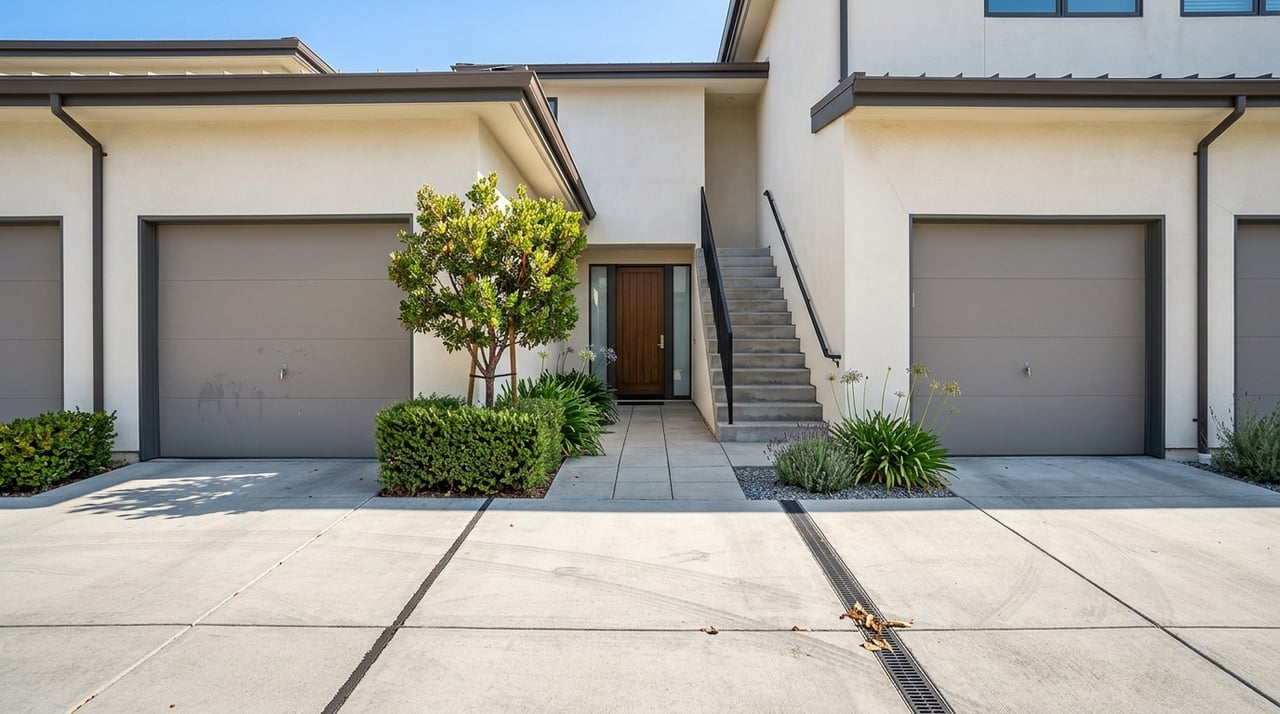
Wondering whether a Foster City townhome is a simpler path into homeownership than a single-family home? It can be, but attached-home buying here comes with a few local details that matter more than buyers expect. If you understand the ownership structure, HOA health, parking setup, and how lagoon-side location affects value, you can make a smarter decision with fewer surprises in escrow. Let’s dive in.
Foster City townhomes are not all the same
In Foster City, the word townhome tells you more about how a home looks than how it is legally owned. In California, a townhome can be a condominium, a planned development, or another type of common interest development.
That distinction matters because the legal structure helps define what you actually own and what the HOA controls. Before you get too attached to a property, you should confirm the ownership type in the title report and the CC&Rs, not just the listing description.
Layouts and features you will likely see
Foster City townhomes often offer practical, space-efficient floorplans. Current listings commonly show 2-story layouts with 2 to 3 bedrooms, 1.5 to 2.5 baths, and roughly 1,000 to 2,170 square feet.
You may also see end units, homes with a ground-floor bedroom, or a main-level entry. Outdoor space is usually more limited than a detached home, with a patio, balcony, or small yard instead of a large private lot.
That outdoor area may not be as straightforward as it looks. Under California common-interest-development rules, patios, balconies, yards, driveways, and even parking spaces can be exclusive-use common area, which means your rights and responsibilities depend on the governing documents.
Why legal structure matters
Ownership affects maintenance
If a home is in a common interest development, maintenance responsibility is often split between you and the HOA. California Civil Code 4775 generally places common area responsibility on the association, separate-interest responsibility on the owner, and maintenance of exclusive-use common area on the owner, while the association remains responsible for repair and replacement of that exclusive-use area.
In plain English, that means you should not assume the HOA handles everything outside the walls. Roofs, siding, patios, balconies, decks, windows, and utility lines may each fall under different responsibility rules depending on the project documents.
Marketing language can mislead
Two homes that both look like townhomes may operate very differently in day-to-day ownership. One community may give you broader control over your outdoor space, while another may limit what you can change or require HOA approval for routine improvements.
That is why buyers in Foster City should read the CC&Rs carefully before removing contingencies. It is one of the best ways to avoid the kind of confusion that leads to expensive surprises later.
Parking deserves a closer look
Parking is one of the biggest quality-of-life issues in many attached-home communities, and Foster City is no exception. Recent listings show a wide mix of setups, including attached one-car garages, tandem garages, side-by-side two-car garages, carports, assigned spaces, below-building parking, and guest parking.
Some homes offer strong parking convenience, while others rely more heavily on shared or limited guest spaces. If you have multiple vehicles, expect regular visitors, or need easy loading and storage, this detail should move high on your checklist.
Street parking also has limits. Foster City police note that vehicles parked on the street must move at least every 72 hours, or they may be treated as abandoned and cited or towed.
What to confirm before you commit
Before removing contingencies, ask for parking details in writing. You will want to confirm:
- How many spaces come with the unit
- Whether the garage is one-car, tandem, or side-by-side
- Whether any spaces are deeded, assigned, or exclusive-use common area
- How guest parking works
- Whether overnight parking rules apply
- Whether private-street rules are stricter than city street rules
HOA documents tell an important story
When you buy in a common interest development, the seller must provide a substantial disclosure package. In California, that can include governing documents, current assessments and fees, unresolved violation notices, rental restriction statements, requested board minutes, and the most recent inspection report required under Civil Code 5551 when applicable.
This paperwork is not just a formality. It gives you a window into how the community is run, whether the association is planning major repairs, and whether there are existing issues that could affect your ownership costs.
Reserve strength matters
The annual HOA budget report must include a reserve summary and a statement about whether special assessments are expected. Separately, the board must conduct a reserve study at least every three years and review it annually.
For you as a buyer, that means monthly dues should never be viewed in isolation. A lower HOA fee may not be a better deal if reserves are thin or major repairs are approaching.
Watch for special assessment risk
A well-run HOA usually shows a pattern of planning ahead for maintenance and replacement costs. If the budget, reserve summary, or board materials point to deferred work or funding gaps, that can raise the chance of future special assessments.
That does not automatically make a property a bad purchase. It does mean you should understand the numbers clearly before moving forward.
Balconies, decks, and exterior elements matter more here
If the townhome is part of a condominium project with exterior elevated elements, California Civil Code 5551 requires periodic visual inspections every nine years. Since January 1, 2026, the seller’s common interest development disclosure packet must include the latest report when applicable.
This is especially important in attached homes with balconies, decks, and waterproofed exterior surfaces. Problems in those areas can be costly and may not be obvious during a standard showing or walkthrough.
If you are considering a unit with a balcony or deck, review any available inspection information closely. You should also ask about repair history, waterproofing work, and whether any related projects are still pending.
Foster City’s lagoon setting changes the buying equation
Foster City is not a typical suburban layout. The city describes the lagoon as a drainage detention basin and the levee as a flood-protection system that also connects into the Bay Trail.
That setting shapes how many townhome communities feel and function. Water orientation, trail access, view lines, common-area rules, and privacy can all influence day-to-day enjoyment and long-term value.
Lagoon-side homes may trade at a premium
Lagoon-facing or water-adjacent units are often marketed around views, decks, trail access, and in some cases water-oriented amenities. Based on current listing patterns and local market behavior, those features can support a meaningful premium, although the exact difference depends on size, condition, parking, HOA dues, and the specific community.
That does not mean an interior unit is less desirable. Interior townhomes may appeal for reasons like privacy, quieter exposure, parking convenience, or a more efficient floorplan.
Flood protection is part of the local picture
The city states that the lagoon and levee system provide flood protection, with FEMA certifying the levee as protection against the 1-percent annual chance flood and mapping the city in Zone X, where mandatory flood insurance is not required. The city also says levee improvements were completed in February 2024 to preserve FEMA accreditation and improve resilience through future sea-level-rise projections.
For buyers, the key takeaway is simple. You should understand how location within Foster City shapes value and disclosure review, especially when a home is close to the lagoon, trail, or other water-oriented features.
Check permits for any remodel work
In attached housing, renovations can affect not only your unit but also shared or adjacent elements. Foster City’s Building Division states that permitted construction must comply with California Building Codes and city codes.
That makes permit review especially important if the home has a remodeled kitchen or bath, altered stairways, patio enclosures, garage conversions, or changes affecting balconies and outdoor spaces. If work was done without permits, that can create complications after closing.
A smart Foster City townhome checklist
If you want a more predictable purchase, focus on the details that matter most early in escrow. Here is a practical checklist:
- Confirm the legal ownership type in title and the CC&Rs
- Review HOA dues, assessments, reserve summary, and reserve study materials
- Read parking rules, guest parking policies, and any private-street restrictions
- Match maintenance responsibility to the actual unit features, including roof, siding, windows, patio, balcony, deck, and utility lines
- Ask for the latest relevant inspection reports when balconies, decks, or exterior elevated elements are involved
- Verify permits for remodels, enclosed outdoor areas, garage changes, and structural updates
- Compare lagoon-side value factors with interior-unit advantages so you know what you are really paying for
The bottom line for Foster City buyers
A Foster City townhome can be a great fit if you want efficient space, lower-maintenance living, and access to one of the Peninsula’s most distinctive planned communities. The key is knowing that here, the details behind the listing often matter just as much as the finishes you see on tour.
When you verify the legal structure, review the HOA package carefully, confirm parking, and understand how lagoon-side location affects value, you put yourself in a much stronger position. That is the kind of up-front work that helps create the no-surprises purchase experience most buyers want.
If you are comparing townhomes in Foster City and want clear, local guidance through the process, reach out to Benjamin Chirko for a no-surprises consultation.
FAQs
What does townhome mean for buyers in Foster City?
- In Foster City, townhome usually describes the home’s architectural style, not the legal ownership structure, so you should confirm through title and the CC&Rs whether it is a condominium, planned development, or another type of common interest development.
What HOA documents should Foster City townhome buyers review?
- You should review the governing documents, current assessments and fees, reserve summary, reserve study information, unresolved violation notices, rental restriction statements, requested board minutes, and any required inspection reports provided in the seller disclosure package.
What should buyers know about parking in Foster City townhome communities?
- Parking setups vary widely, so you should confirm whether the unit includes a one-car garage, tandem garage, two-car garage, assigned space, carport, or guest parking, and also verify any overnight or private-street parking restrictions.
Do Foster City townhome buyers need to worry about balconies and decks?
- Yes, because balconies, decks, and other exterior elevated elements can involve significant repair costs, and in applicable condominium projects the latest Civil Code 5551 inspection report can reveal issues that are not obvious during a showing.
How does lagoon-side location affect Foster City townhome value?
- Lagoon-side or water-adjacent homes may command a premium based on views, decks, trail access, and water-oriented amenities, while interior homes may compete more on privacy, convenience, layout, condition, and HOA quality.
Why should Foster City townhome buyers check permits?
- You should verify permits for remodels and additions because changes to kitchens, baths, balconies, patios, stairways, garages, and enclosed outdoor areas may affect code compliance and create ownership issues after closing.
