Wondering what it’s really like to live in San Bruno? If you want a Peninsula city with practical transit options, established residential areas, and easy access to major job centers, San Bruno deserves a closer look. Whether you are planning a move, starting a home search, or comparing neighborhoods, this overview will help you understand how the city is laid out, what daily life can feel like, and where housing opportunities may be headed. Let’s dive in.
San Bruno at a glance
San Bruno is a compact city in San Mateo County with 43,908 residents across 5.49 square miles. That works out to a population density of about 7,999 people per square mile, which gives the city a fairly dense suburban feel. It is established rather than sprawling, with residential areas, shopping corridors, offices, and transit connections all packed into a relatively small footprint.
From a housing standpoint, San Bruno has a strong owner base along with a meaningful rental market. The owner-occupied housing rate is 60.5%, the median owner-occupied home value is $958,300, and the median gross rent is $2,459. For many buyers and movers, those numbers point to a city with long-term residents, active demand, and a mix of ownership and rental options.
Location and commuting
One of San Bruno’s biggest advantages is how connected it is to the rest of the Peninsula and beyond. The mean commute to work is 28.0 minutes, and the city’s transit network makes it a practical choice if you need to move around the Bay Area for work, travel, or everyday errands. That convenience is a major part of San Bruno’s appeal.
San Bruno Station sits next to the Tanforan shopping mall and business area. BART notes that the station is also served by SamTrans, and Caltrain lists San Bruno among its wheelchair-accessible stations. If you rely on public transit, that combination can make daily routines more manageable.
Airport access is another standout feature. SFO’s transit guidance says you can take BART to the airport and transfer to AirTrain for the terminals, while SamTrans Route 292 serves SFO and nearby hotels in San Bruno. For anyone who travels often or wants quick airport access, that is an important part of the lifestyle equation.
Employment and business hubs
San Bruno is not just a bedroom community. It also has a significant office presence, especially in Bayhill, which the city identifies as its largest office cluster. According to the city, Bayhill Office Park includes about 1.6 million square feet of office space and is home to companies including YouTube, Walmart.com, and The Police Credit Union.
Bayhill also benefits from close access to I-280, I-380, Caltrain, and BART. That makes it a notable employment center within the city and helps explain why San Bruno often appeals to buyers who want to stay close to work without committing to a more urban environment. If your daily life involves balancing commute time with neighborhood comfort, this part of San Bruno can be especially relevant.
Neighborhoods and city layout
San Bruno is best understood as a city made up of distinct subareas rather than one uniform neighborhood. City planning materials refer to places such as Crestmoor, Mills Park, Bayhill, Tanforan, San Bruno Park, Lomita Park, Belle Air, Rollingwood, Monte Verde, Huntington Park, Parkview, Pacific Heights, and Portola Highlands. Each name helps signal a different part of the city’s geography and development pattern.
That matters when you are searching for a home. In a compact city, even short distances can shape your experience of access, topography, housing type, and nearby commercial activity. A home near a shopping or transit corridor may feel very different from one in a hillside or postwar residential area.
San Bruno also does not revolve around one traditional historic downtown. Instead, its retail and activity centers are more corridor-based. The city zoning map identifies Central Business District, Neighborhood Commercial, Regional Commercial, and Bayhill Neighborhood Commercial areas, which gives you a clearer sense of how services and shopping are distributed across the city.
Housing styles in San Bruno
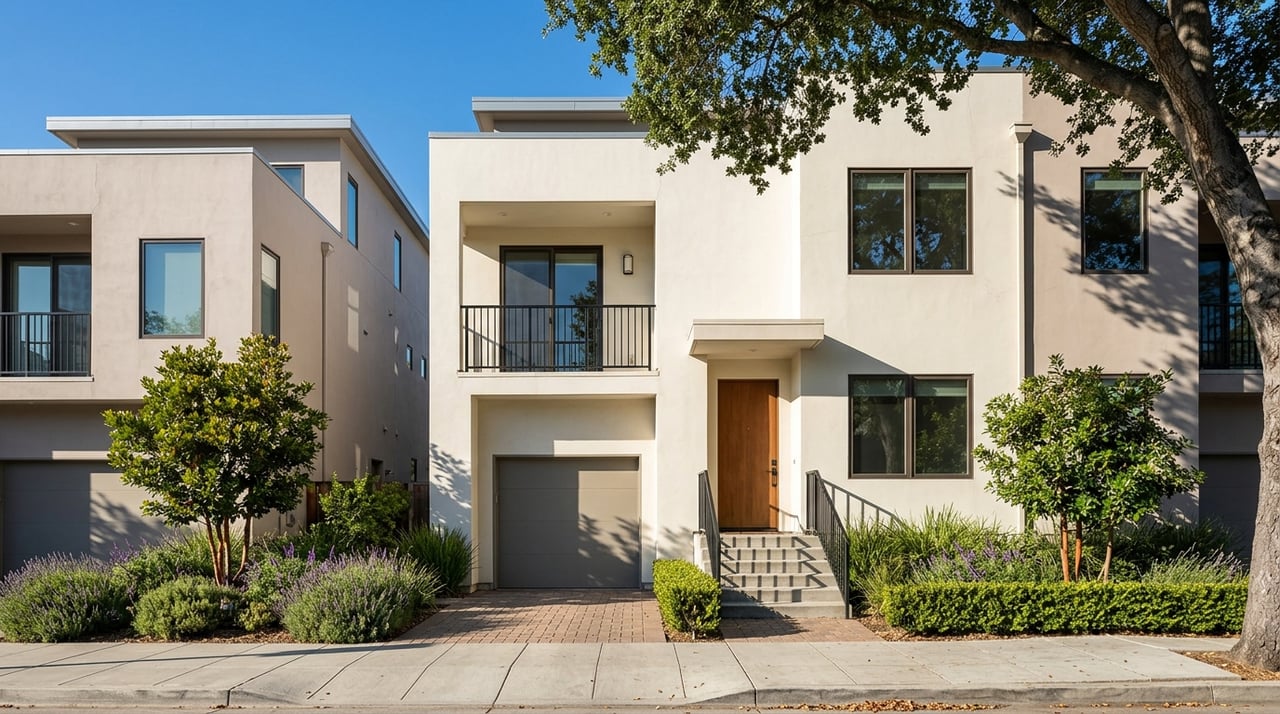
San Bruno’s housing stock reflects several eras of development, which gives the city a varied residential feel. A city historic resource report notes that early 1900s subdivisions grew near El Camino Real and the rail lines, with early homes built in traditional residential styles. Over time, postwar subdivisions introduced more ranch-style homes and curving streets.
Single-family tracts dominated through the 1960s, and multi-unit complexes were added in the 1970s. Today, that layered history still shows up in the city’s streetscape. Depending on where you look, you may find older homes near established corridors, postwar single-family areas, or later multi-unit housing.
Current city rules also show an emphasis on managing change carefully. San Bruno’s Residential Design Guidelines say changes to single-family and two-family homes must respect neighborhood character. Planning applications also show the city continues to process cases involving single-family homes, duplexes, SB-9, multi-family density bonus projects, and ADUs.
New housing and redevelopment
San Bruno is planning for more housing through infill rather than outward expansion. The city’s 2023-2031 Housing Element sets a Regional Housing Needs Allocation target of 3,165 homes. That target helps frame where future development pressure may be concentrated.
One of the biggest opportunity areas is Tanforan. City news reports that the 44-acre Tanforan site received a formal redevelopment application in late 2024, and city housing documents describe it as a key opportunity site expected to include more than 1,000 residential units. For buyers and property owners, that is worth watching because major redevelopment can reshape nearby amenities, housing choices, and traffic patterns over time.
The city has also adopted a Transit Corridors Plan that promotes higher-density infill and mixed-use development along transit corridors. That includes housing above shopping, restaurants, or office space. In practical terms, this suggests San Bruno’s future growth may continue to center on transit-served, mixed-use areas rather than expansion into entirely new residential zones.
Parks and recreation
San Bruno offers a solid recreation base for a city of its size. The city says it has 19 parks, with playgrounds, sports facilities, and green space spread across the community. That means you have multiple options for outdoor time close to home, whether your focus is a casual walk, a playground stop, or organized activities.
The city also operates the Recreation and Aquatic Center at 251 City Park Way. For many residents, having a dedicated recreation facility adds day-to-day convenience and expands options beyond neighborhood parks alone. It is another example of how San Bruno packs a lot into a compact footprint.
Outdoor access also extends beyond city parks. Nearby county parkland includes Junipero Serra Park trails with views of San Francisco Bay, SFO, and Mount Diablo, and San Bruno Mountain State & County Park rises above the city. If you like having open-space options nearby without leaving the Peninsula, this is a meaningful part of the local lifestyle.
Shopping and daily convenience
In San Bruno, shopping is tied more to corridors and centers than to one main street. San Bruno Station sits beside the Tanforan shopping mall and business area, and the Bayhill Specific Plan describes Bayhill Shopping Center as a neighborhood commercial center serving residents and employees. This layout can be convenient if you prefer easy access to errands and services in different parts of the city.
Because the city is compact, many daily destinations can feel close at hand. That does not mean every area feels the same, though. Some parts of San Bruno are more tied to commercial corridors and transit, while others feel more residential and tucked away.
Who San Bruno may suit best
San Bruno can make sense if you want a commuter-oriented Peninsula location with established neighborhoods and practical transportation options. Its mix of transit access, airport proximity, office space, and varied housing types creates flexibility for different kinds of buyers. That is especially true if your search priorities include convenience and connection.
It may also appeal to buyers who want access to the broader Peninsula without choosing a more intensely urban setting. The city’s established housing stock, neighborhood variety, and ongoing infill planning create a balance between familiarity and change. If that combination fits your goals, San Bruno is worth a serious look.
What to keep in mind as a buyer
If you are exploring San Bruno, it helps to compare homes not just by price and size, but also by location within the city. Access to BART, major roads, shopping corridors, office hubs, parks, and hillside areas can shape your daily routine in different ways. In a compact city, those details matter.
It is also smart to pay attention to how future redevelopment may affect certain areas. Plans tied to Tanforan and transit corridors could add new housing and mixed-use projects over time. That does not automatically mean one area is better than another, but it does mean you should evaluate both present-day fit and future context.
A neighborhood overview is a strong starting point, but buying decisions come down to property-by-property analysis. If you want a clear picture of how San Bruno fits your budget, commute, and home search goals, working with a local team can help you move forward with more confidence and fewer surprises.
If you are thinking about buying or selling on the Peninsula and want practical guidance on San Bruno’s neighborhoods, housing options, and market context, connect with Benjamin Chirko for a no-surprises conversation about your next move.
FAQs
What is San Bruno like for commuting on the Peninsula?
- San Bruno offers strong transit and road access, with BART, SamTrans service at San Bruno Station, Caltrain accessibility, nearby I-280 and I-380 connections, and a mean commute time of 28.0 minutes.
What kinds of homes are common in San Bruno?
- San Bruno includes housing from several eras, including early 1900s homes near older corridors, postwar ranch-style subdivisions, single-family tracts from the mid-20th century, and multi-unit complexes developed in the 1970s.
What are the main neighborhood areas in San Bruno?
- City planning materials reference subareas including Crestmoor, Mills Park, Bayhill, Tanforan, San Bruno Park, Lomita Park, Belle Air, Rollingwood, Monte Verde, Huntington Park, Parkview, Pacific Heights, and Portola Highlands.
How convenient is San Bruno for airport access?
- San Bruno is very convenient for airport trips because BART connects to SFO with an AirTrain transfer, and SamTrans Route 292 also serves SFO and nearby hotel areas in San Bruno.
Is San Bruno adding more housing?
- Yes. San Bruno’s 2023-2031 Housing Element sets a target of 3,165 homes, and city plans identify transit corridors and the Tanforan redevelopment site as major areas for future infill housing.
Does San Bruno have parks and recreation options?
- Yes. The city says it has 19 parks, plus a Recreation and Aquatic Center, and nearby county parkland adds additional trail and open-space options.
