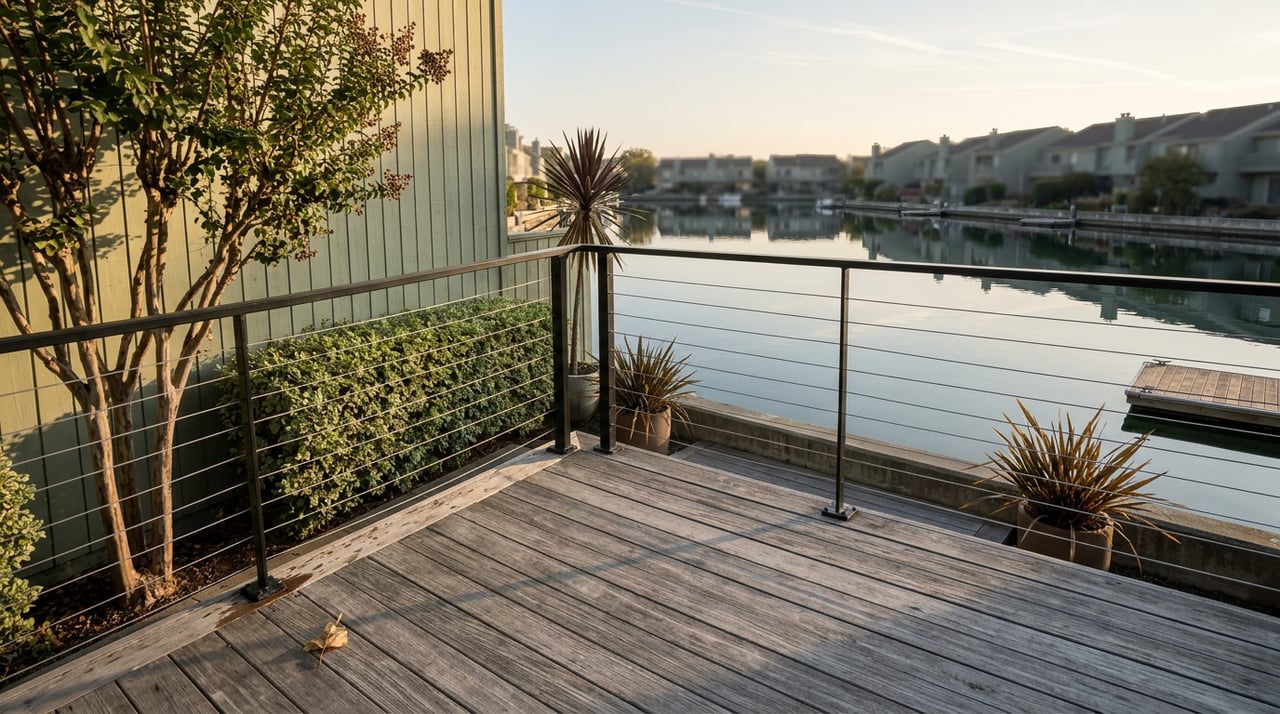
On a normal Wednesday evening, the water behind Leo J. Ryan Park looks like the calmest place in San Mateo County. Pedal boats drift past the Adirondack chairs. A kid on a paddleboard wobbles near the dock while a parent films it on a phone. The loudest thing on the lagoon is usually the Off the Grid food truck line.
That was not the scene on September 12 and 13. It will not be the scene on September 26 and 27 either. Twice in the same month, that same stretch of water turns into a competitive racecourse, with twenty-paddler boats sprinting side by side while a drummer keeps stroke rate and a crowd lines the shore timing splits. If you live near the lagoon and only know it as the place you paddle on weekends, this is worth understanding: Foster City didn't get lucky and land one dragon boat festival. It built the kind of water that draws two different organizations to run their own regattas here, back to back, and has for years.
What's Actually Happening Next Weekend
The San Francisco Bay Area Dragon Boat Fall Sprints run September 26 and 27 at Leo J. Ryan Park, hosted by the Bay Area Dragons, a nonprofit racing club that calls Foster City home. It's a sprint format: 250-meter heats, each one over in under two minutes, with qualifying races in the morning and finals in the afternoon. Free parking sits within walking distance of the park, and food trucks work the race site through the weekend, so if you're headed to the lagoon anyway, you'll see tents, team canopies, and a lot more foot traffic than a normal Saturday.
This is the club's third year running the Fall Sprints specifically. The event started in 2024 as a way to give competitive and recreational teams a second regatta to close out the racing season, separate from the club's longer-running summer novice race, which has drawn corporate teams to the lagoon since 2014.
Two Regattas, Fifteen Days Apart
What makes this month unusual isn't just that a race is happening. It's that Leo Ryan Park hosted a completely different dragon boat festival two weeks earlier, run by a different organization entirely.
| Event | Dates | Host | Format |
|---|---|---|---|
| Northern California International Dragon Boat Festival | September 12–13, 2026 | California Dragon Boat Association (CDBA) | Multi-division races including mixed crew, women's, masters, college, and youth, plus a 250-meter sprint |
| SF Bay Area Dragon Boat Fall Sprints | September 26–27, 2026 | Bay Area Dragons (BAD) | Competitive sprint regatta, 250-meter heats |
Both organizations trace their roots to 1996. CDBA has run its international festival since that year, drawing teams from well beyond the Bay Area. The Bay Area Dragons were founded the same year as the first dragon boat club in Northern California, and they still run their practices out of Foster City's Boat Park at 899 Bounty Drive, with free beginner sessions most weekends.
That's two organizations, founded the same year, both choosing this lagoon as their competitive home base three decades later. That's not coincidence. That's infrastructure.
Why This Water, Specifically
Dragon boat racing needs water that behaves predictably: no current, no chop, no wake from passing boat traffic. Foster City's lagoon was built to those exact specs, just for different reasons.
The lagoon carries brackish water pumped in directly from San Francisco Bay through automated intake gates, but because it's fully enclosed, there's no tide and no swell once the water's inside. The city caps every vessel at 5 miles per hour and bans gasoline and diesel motors outright. Only electric boats, sailboats, and human-powered craft are allowed on the water at all. Those rules exist to keep the lagoon calm and quiet for the waterfront homeowners who live along it, but they also happen to produce exactly the flat, current-free lane a boat holding twenty paddlers, a drummer, and a steersperson needs to hold a straight sprint line.
In other words, the same design choices that make the lagoon pleasant for a Tuesday-evening paddle are what make it a legitimate regatta venue. Residents get the calm water as a daily amenity. Competitive clubs get it as a training ground good enough to anchor two national-caliber events a month apart.
What Actually Changes for You Next Weekend
If your normal routine includes the lagoon, here's what shifts on race weekends and where to go instead:
- The floating docks at Leo J. Ryan Park will be staging area for race boats, not available for casual launches.
- Boat Park, with its concrete ramp, stays open and is the better bet if you're bringing your own kayak, canoe, or electric boat.
- Gull Park, Marlin Park, and Erckenbrack Park all have sandy beach access for hand-carried kayaks and paddleboards, and none of them sit anywhere near the race lanes.
- California Windsurfing, the rental outfit that operates right behind the Vibe recreation center at 650 Shell Blvd, stays open on its normal schedule (Tuesday through Friday afternoons, weekends 11:30 to 5) but is cash-only, so bring bills if you're planning to rent a pedal boat or paddleboard.
- Parking near Leo Ryan Park will be tighter than usual with race spectators and team support vehicles added to the mix, so residents heading to the park for anything other than the race should expect to circle a bit.
None of this requires rerouting your whole weekend. It just means the inner loop closest to the amphitheater is spoken for, and the rest of the four miles of interconnected channels are exactly as available as always.
The Lagoon Isn't One Body of Water. It's Several.
Race weekend is a useful reminder that the lagoon isn't a single, interchangeable amenity, even though it reads that way on a map. It's several distinct zones that happen to connect.
The stretch at Leo Ryan Park is built for spectacle and competition, wide enough for side-by-side racing and ringed by grass for a crowd. Boat Park is the utility zone, a concrete ramp meant for people trailering in their own gear. Gull, Marlin, and Erckenbrack are the quiet residential coves, sandy and low-key, where a beginner can practice strokes without an audience. And if you actually want wind for windsurfing, the inner lagoon won't give it to you. The channels are too narrow and the surrounding buildings block it. Baywinds Park, out on the open Bay side at 3rd Avenue, is where that sport actually happens, thanks to a wind tunnel effect the enclosed lagoon simply doesn't have.
Most residents treat all of this as one interchangeable "the lagoon." It isn't. It's a set of purpose-built zones that happen to share a shoreline, and dragon boat season is one of the only times of year the boundaries between them become obvious.
If You'd Rather Watch History Than Heats
If two dragon boat regattas in one month sounds like more crowd than you're after, the Foster City Historical Society runs a quieter alternative most Sundays: a guided History Boat Tour departing from the waterfront at the William E. Walker Recreation Center, 650 Shell Blvd. The route passes Leo Ryan Park, the neighborhood's man-made islands, the Captain's House, a couple of the original bridges, and the pump station that keeps Bay water circulating through the whole system. Reservations are required and space is limited, but it's a way to see the same water from a completely different angle, at a completely different pace, on the same weekend the race lanes are packed with 20-paddler boats.
That's the real shape of the lagoon: fast and loud in one corner on race weekends, slow and historical in another, calm and residential everywhere else. Knowing which is which is the difference between planning around race weekend and just being annoyed by it.
If you're thinking about what it's actually like to live with this lagoon day to day, not just visit it, that's a conversation worth having with someone who watches this neighborhood closely. Chirko Group works this stretch of the Peninsula year-round and can talk through what waterfront access, park proximity, and neighborhood texture like this actually mean for a home search here. Request your no-surprises consultation when you're ready to talk specifics.
